The Rise of the Forward Deployed AI Engineer
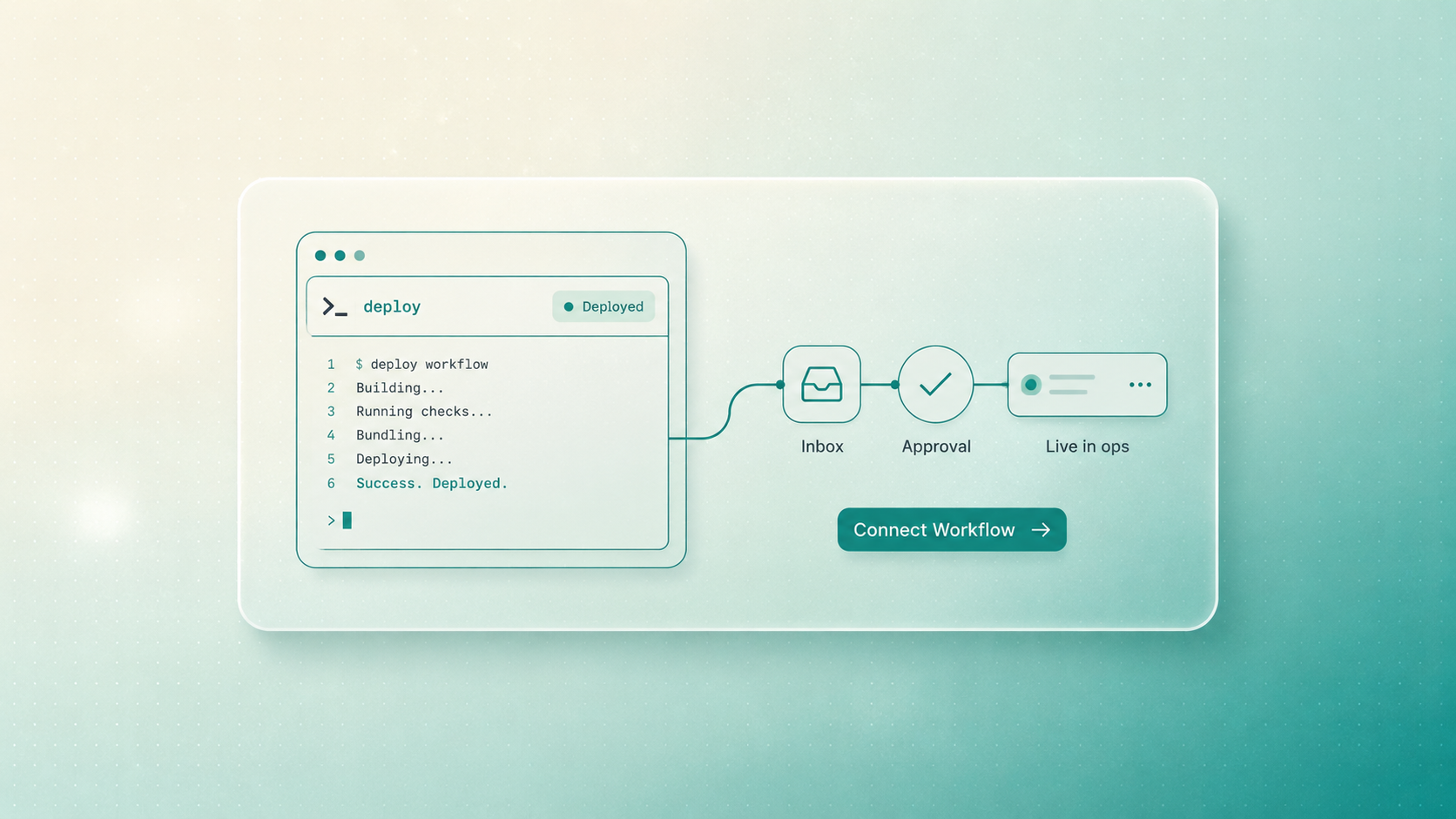
AI is moving from the software shelf into the operating room of the business.
That shift is why the phrase "forward deployed AI engineer" is starting to matter. OpenAI and Anthropic now advertise roles built around engineers working directly with customers to turn frontier models into production systems, enterprise deployments, and workflow-specific solutions. The signal is clear: serious AI adoption is no longer just about access to a model. It is about implementation inside the real conditions of the business.
For CEOs, founders, CTOs, and operations leaders, this changes the buying decision. The question is not, "Which AI tool should we buy?" The better question is, "Who can understand our workflow deeply enough to build AI into the way we already operate?"
That is the role a forward deployed AI engineer is meant to fill.
What Is a Forward Deployed AI Engineer?
A forward deployed AI engineer is an engineer who works close to the customer’s real business environment. Instead of building generic software from a distance, they sit near the operational problem, study the workflow, identify where AI can create practical value, and build systems that survive daily use.
In plain terms, they bridge three worlds:
- The business outcome the leadership team cares about
- The messy workflow the team actually runs every day
- The technical system needed to make AI reliable, useful, and adopted
This matters because most AI tools are powerful in isolation but incomplete in context. A model can summarize, classify, draft, search, reason, and generate. It does not automatically know your approval rules, your sales handoffs, your client data structure, your reporting cadence, or the places where your team quietly loses hours every week.
The forward deployed model exists because that context is where the value lives.
Why the Old AI Buying Pattern Breaks
Many companies still approach AI like a software purchase. They compare tools, buy subscriptions, run a demo, and expect the team to transform its work around the new platform.
That can help for individual productivity. It rarely creates durable operational change.
The reason is simple: businesses do not run on tools alone. They run on handoffs, exceptions, data quality, approvals, incentives, customer expectations, and habits. If AI sits outside those patterns, the team treats it as another destination to visit. Adoption fades because the system is not woven into the work.
Think of it like healthcare triage. A patient may need a specialist, a scan, medication, or surgery. But the first job is to understand the immediate symptom and decide what needs attention first. A good forward deployed AI engineer does the same thing for a business. They do not begin by prescribing a large transformation program. They identify the operational pain that is costing time, money, quality, or speed right now.
For a marketing agency, that might be proposal creation. For a property business, it might be lead qualification. For a design studio, it might be turning client inputs into usable production briefs. For an operations team, it might be reporting that requires five people to copy, clean, reconcile, and explain the same information every week.
The first useful AI project is usually not glamorous. It is specific, measurable, and close to the work.
The Gap Between Raw AI and Business Value
The biggest misconception about AI implementation is that capability equals impact.
Frontier models are increasingly capable, but a capable model is not the same as a working business system. Business value usually requires:
- Clean inputs from the systems your team already uses
- Permission rules and approval logic
- Workflow routing
- Human review at the right moments
- Error handling for messy data
- Integration with CRM, email, databases, project management tools, or reporting systems
- A feedback loop after the first version goes live
Without those pieces, AI remains a helpful assistant at the edge of the business. With them, it can become part of the operating system.
This is where forward deployed AI engineering differs from traditional consulting. The work is not only to recommend a roadmap. It is to build, test, adjust, and keep the system close to the team long enough for it to become trusted.
Why Embedded Delivery Matters for Mid-Market Companies
Large enterprises may have internal AI labs, transformation teams, and platform engineers. Most growing companies do not. They have ambitious leaders, capable teams, overloaded operations, and a backlog of workflows that could be improved if someone had the time and technical depth to fix them.
That is the gap WhatanAidea is built to serve.
Our forward deployed approach is designed for mid-market leaders and fast-growing companies that need practical AI implementation without the weight of a giant consulting program. We embed close enough to understand the workflow, but we stay focused enough to ship useful systems quickly.
The engagement usually starts with one question:
Where is the biggest operational choke point right now?
That question matters because the business owner often knows the pain before the data proves it. The founder knows which process keeps slipping. The COO knows which report always turns into a scramble. The sales lead knows where good prospects get stuck. The delivery lead knows which internal handoff creates rework.
We start there.
How the WhatanAidea Forward Deployed Model Works
Our model is built around immediate operational relevance, not abstract transformation theater.
1. Identify the Choke Point
We begin by listening to the people closest to the pain. That may be the founder, COO, CTO, department head, or delivery lead. The goal is to understand the workflow in business language before translating it into technical architecture.
We look for problems with clear drag:
- A lead intake process that requires manual qualification and repeated follow-up
- A proposal workflow where senior people rewrite the same sections every week
- A reporting process that depends on manual spreadsheet cleanup
- A client onboarding process where information is scattered across email, forms, and project tools
- A support triage flow where urgent issues are buried inside unstructured messages
The goal is not to automate everything. The goal is to find the workflow where better systems would create visible relief.
2. Build the First Useful System
Once the bottleneck is clear, we build a focused first system. That may be an AI-assisted workflow, an internal agent, a data-processing pipeline, a custom dashboard, or a set of automations wrapped around your existing tools.
This first system should do three things:
- Reduce manual effort in a real workflow
- Improve speed, consistency, or decision quality
- Prove whether the broader AI opportunity is worth expanding
It should not require the team to change everything at once. Adoption improves when AI fits into the rhythm of the business instead of demanding a sudden behavioral reset.
3. Earn Trust Before Expanding
AI systems become valuable when teams trust them.
That trust is earned through small, visible wins. A system routes the right lead faster. A proposal draft is ready with the right inputs. A report is generated with fewer manual corrections. A manager can approve an edge case instead of discovering a mistake after it reaches a client.
Once the first system proves useful, the next phase becomes easier. The team is more willing to share context, expose deeper workflow issues, and expand AI into more meaningful parts of the operation.
Embedded Does Not Always Mean On-Site
Forward deployed does not have to mean someone sitting at your physical office every day.
For some engagements, in-person work helps. For many modern teams, the more important factor is operational proximity. That means being present in the places where decisions and work already happen: Slack or Teams channels, standups, workflow reviews, sprint planning, leadership calls, and system feedback sessions.
Depending on the engagement, WhatanAidea can:
- Join core communication channels for faster context
- Run collaborative implementation sprints
- Sit in on strategic workflow discussions
- Review real usage patterns after launch
- Adjust the system as the team encounters exceptions
The point is not presence for its own sake. The point is reducing the distance between the builder and the workflow.
When You Need a Forward Deployed AI Partner
This model is most useful when the problem is too important for a generic tool and too workflow-specific for a simple plug-in.
You may need a forward deployed AI partner if:
- Your team is testing AI tools but adoption is inconsistent
- You have repeated manual workflows across sales, delivery, operations, or reporting
- Your data lives across several systems and needs structure before AI can help
- Your leadership team wants AI impact but does not know where to start
- You need custom software around the AI model, not just prompts
- Your internal team is capable but too busy to design and ship the system
It is less useful when you only need basic individual productivity tools, simple content generation, or a one-off prototype with no operational dependency.
The Future of AI Implementation Is Closer to the Work
The forward deployed AI engineer is not just a new job title. It reflects a broader shift in how AI value is created.
The companies that benefit most from AI will not be the ones with the longest tool list. They will be the ones that understand their workflows clearly, choose the right bottleneck first, and build systems that their teams actually use.
At WhatanAidea, we bring that embedded engineering model to businesses that need practical implementation now. We start with the choke point, build the first useful system, earn trust through execution, and expand only where the business case is real.
If your team is exploring AI but unsure where it should live inside the business, start with the workflow causing the most drag.
Want to find the highest-impact workflow to improve first? Start with a focused AI bottleneck consultation. We will help you identify the process worth fixing, estimate the operational value, and map the first system your team could actually use.
Supporting Links
- OpenAI, Forward Deployed Engineer careers page: https://openai.com/careers/forward-deployed-engineer-%28fde%29-seattle-seattle/
- OpenAI, Technical Deployment Lead, Forward Deployed Engineering careers page: https://openai.com/careers/technical-deployment-lead-forward-deployed-engineering-%28fde%29-platform-san-francisco/
- Anthropic, Forward Deployed Engineer careers page: https://www.anthropic.com/careers/jobs/4985877008
- McKinsey, The State of AI: How Organizations Are Rewiring to Capture Value: https://www.mckinsey.com/capabilities/quantumblack/our-insights/the-state-of-ai-how-organizations-are-rewiring-to-capture-value
- NIST, Artificial Intelligence Risk Management Framework 1.0: https://www.nist.gov/publications/artificial-intelligence-risk-management-framework-ai-rmf-10
Written by

WhatanAIdea is an outcome-first AI consultancy. We go deep into your business first, then show where AI fits, where it doesn’t, and what is worth doing first.